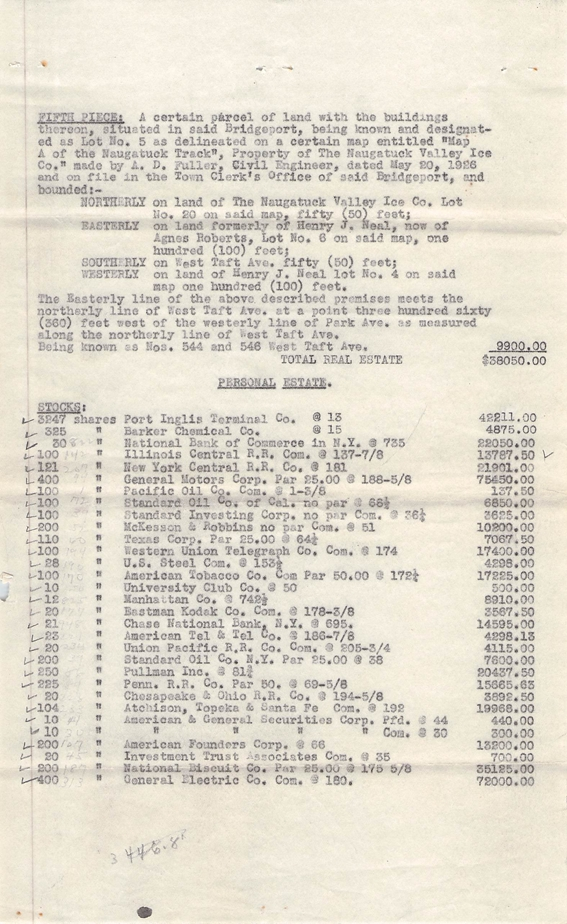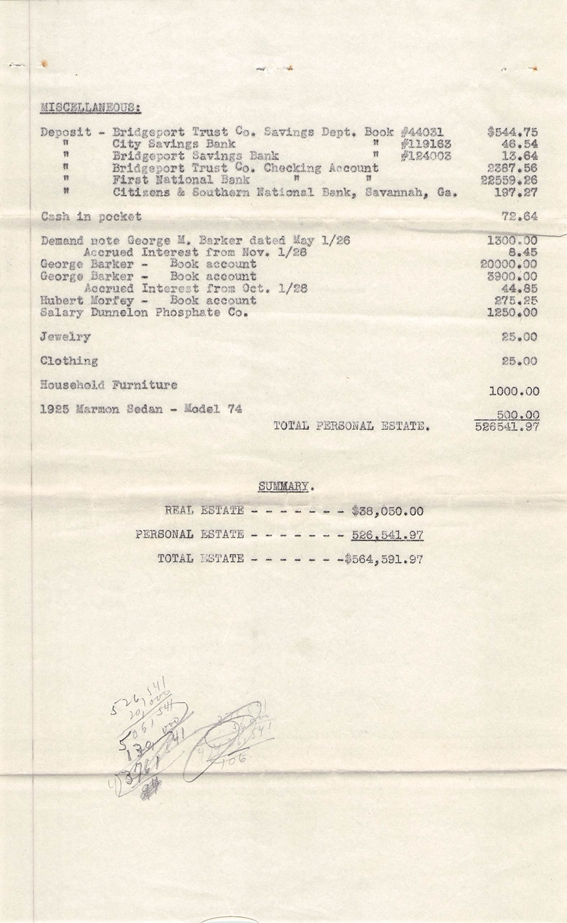
Final Account of the Trust for Ralph F. Barker

Ralph left a trust fund to be used for the care of his son Ralph F. Barker who was resident at the Battleboro Retreat for insane persons. (For more see the Battleboro post)
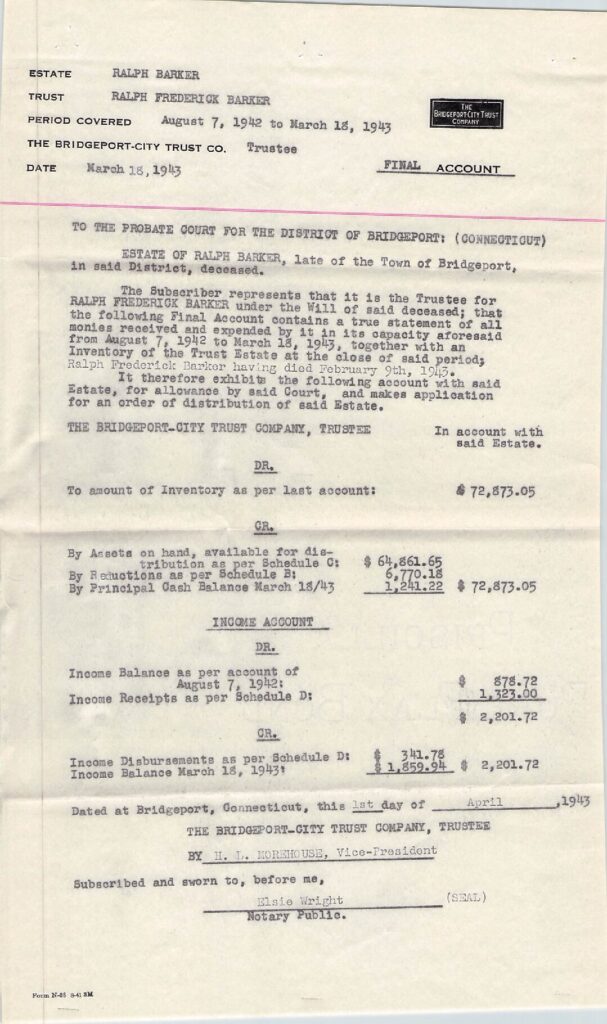
Trust for Ralph F. Barker setup by his father

Posted in Barkers, Uncategorized | Leave a comment

Port Inglis Terminal Co.

The Port Inglis Terminal Co. was a late-19th- and early-20th-century Florida transportation and shipping company closely tied to the phosphate mining industry around the Gulf Coast near present-day Yankeetown and Inglis.

Here are the key facts about the company:
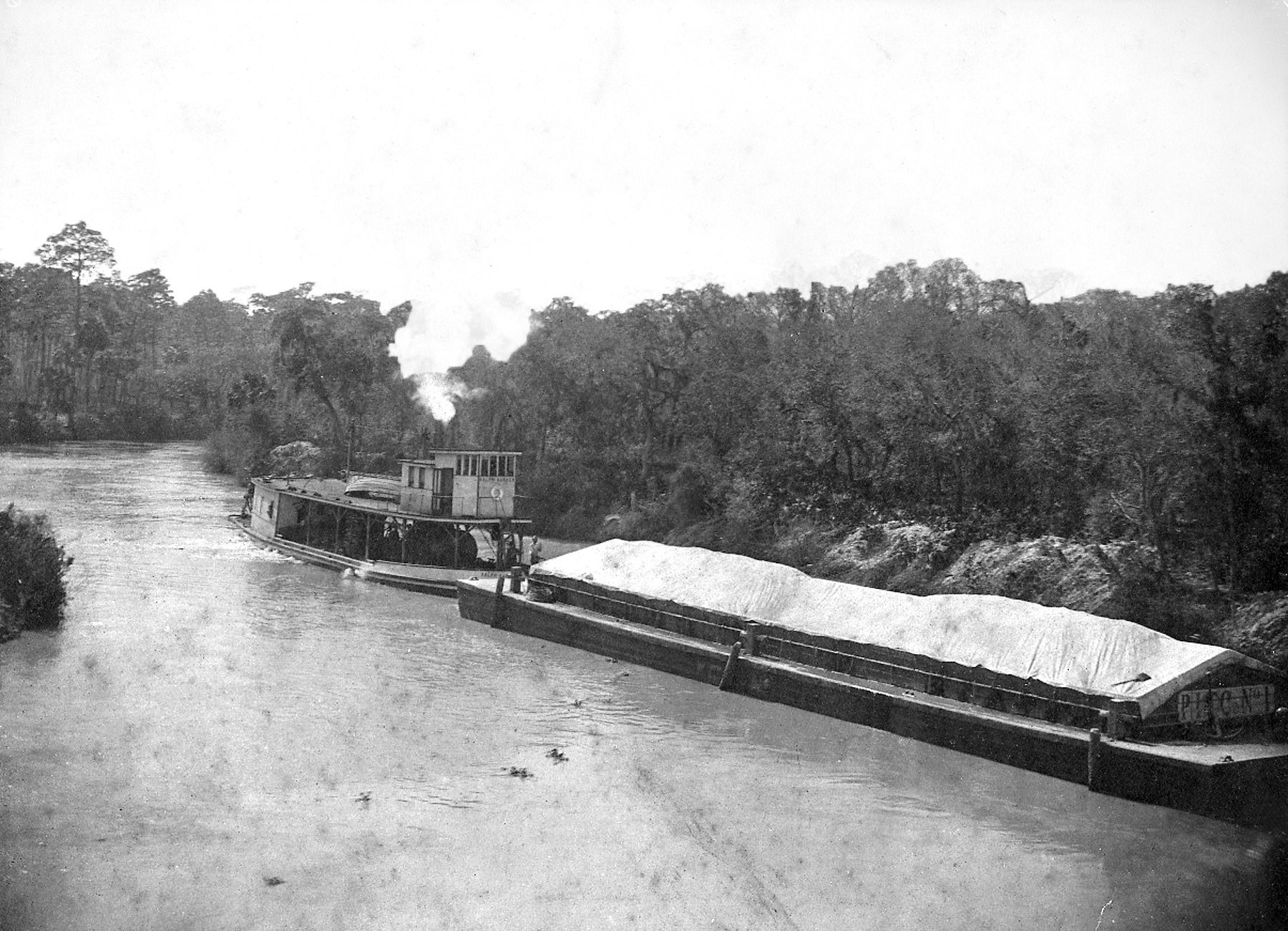
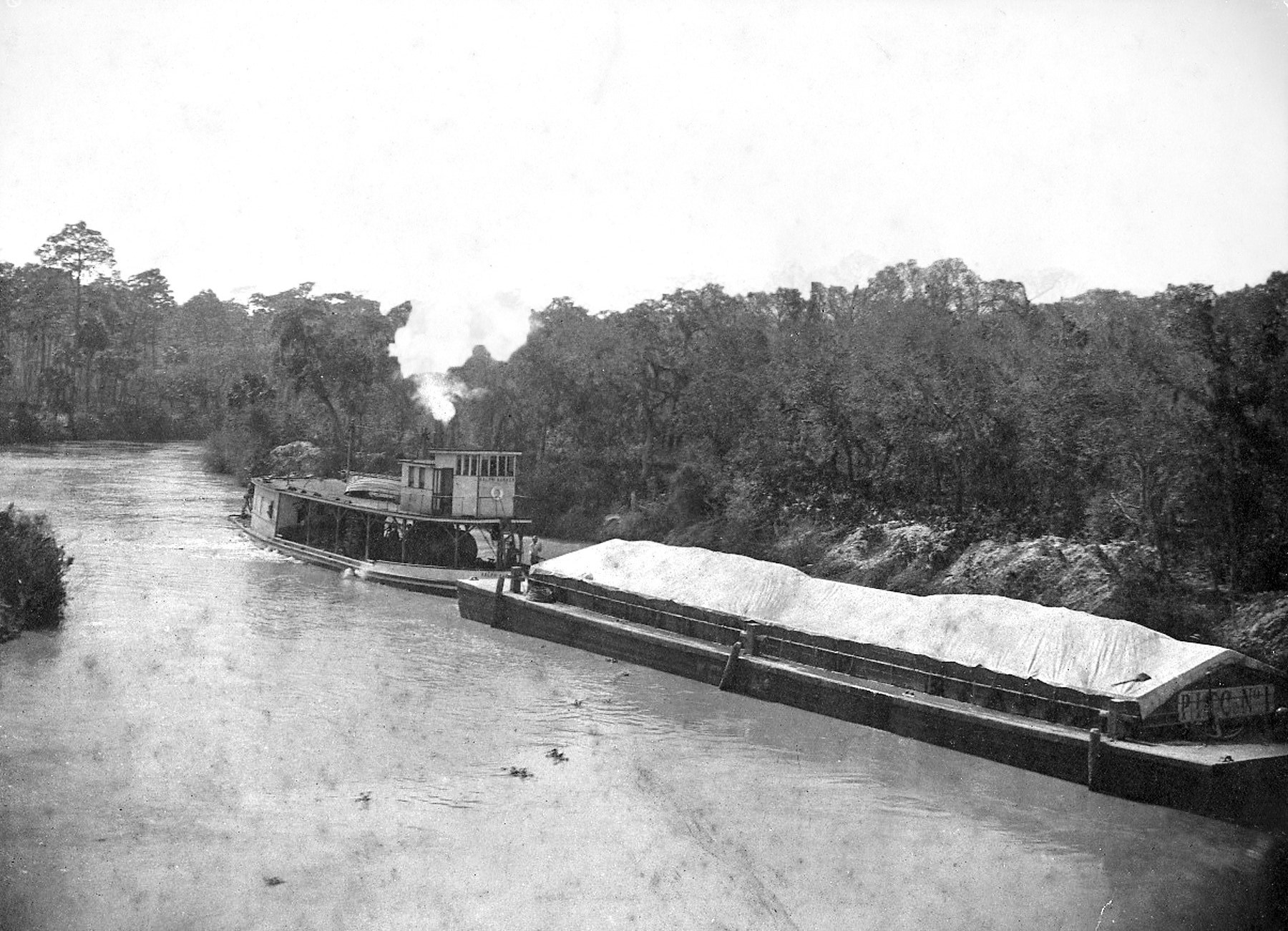
Phosphate barge on the  Withlacoochee River, Florida
Phosphate barge on the Withlacoochee River, Florida

Purpose and Formation

The company was created to support the export of Florida phosphate rock from mines in central Florida to Gulf shipping routes. It worked alongside the Dunnellon Phosphate Company and related railroad operations.

The terminal facilities were established at the mouth of the Withlacoochee River on the Gulf of Mexico. The port area became known as “Port Inglis,” named after Captain John L. Inglis, a Civil War veteran and phosphate executive.

Railroad and Shipping Operations

Port Inglis Terminal Co. operated:

  • rail connections from phosphate mines to the coast,
  • loading docks and wharves,
  • barges and tugboats,
  • marine shipping services for phosphate exports.

Historical records indicate the company transported phosphate products to Gulf and South Atlantic ports including:

  • Pensacola,
  • Mobile,
  • New Orleans,
  • Galveston.

The company also dredged parts of the Withlacoochee River to improve navigation for ocean-going steamships.
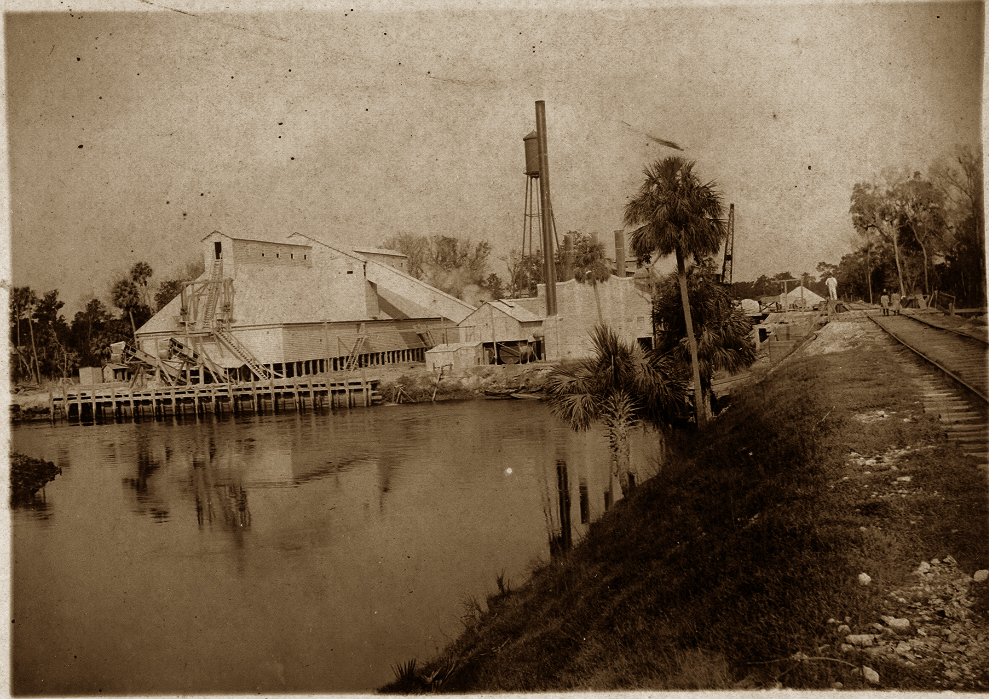
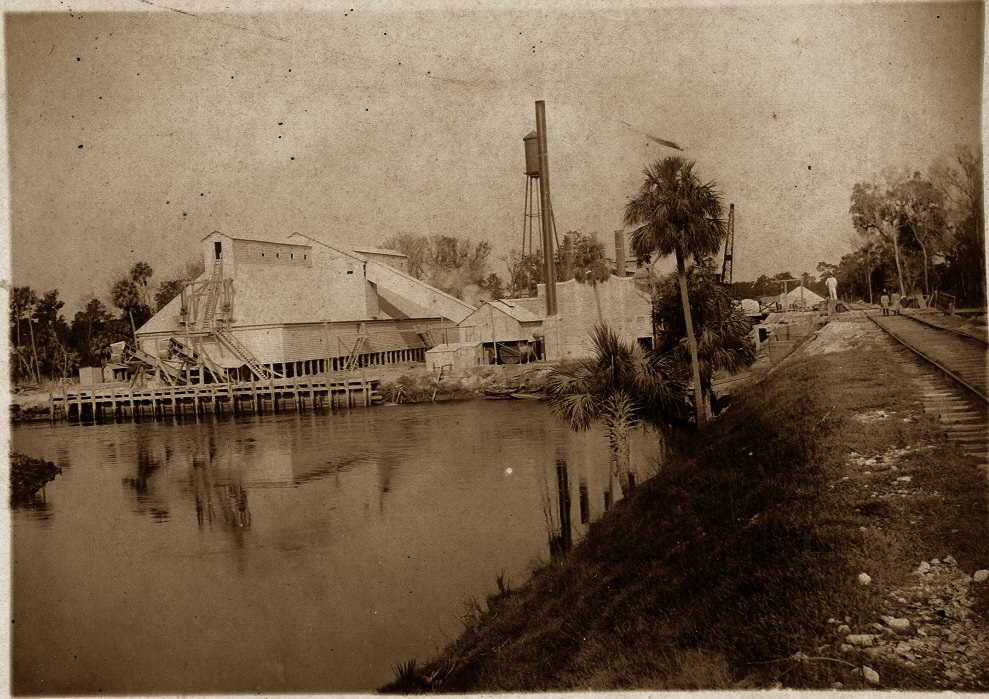
Barker Chemical Plant on the banks of the Withlacoohee river, Florida

Connection to Barker Chemical Company

In 1904, the Barker Chemical Company announced plans for an acid phosphate plant at Inglis using low-grade phosphate rock supplied through Port Inglis Terminal Co. logistics.

This represented an early industrial effort to process lower-grade phosphate materials that otherwise had limited market value.
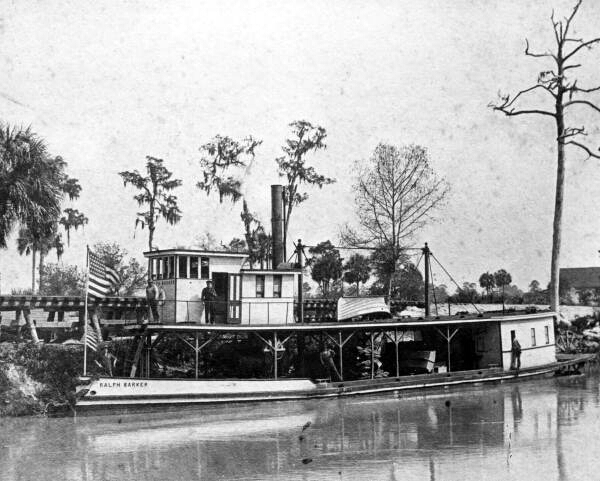
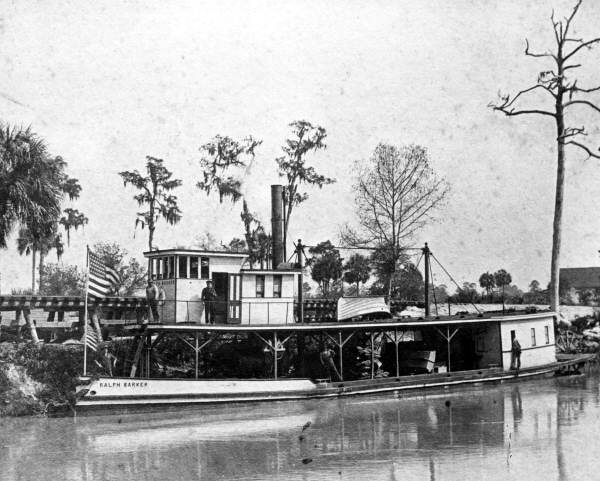
The Barker - a steam operated tugboat used to push phosphate down the Withlacooche river.
The Barker – a steam operated tugboat used to push phosphate down the Withlacooche river.

Ships and Marine Equipment

Historical shipbuilding references show vessels associated with the company, including:

  • Ralph Barker (around 1900),
  • Withlacoochee barge (1906).

Financial Securities and Bonds

The company issued railroad- and terminal-related bonds and freight certificates in the early 1900s. Surviving specimen bonds are now collectible “scripophily” items and appear in auction archives.

Examples include:

  • 1904 $1,000 collateral trust gold bonds,
  • 1905 freight certificate bonds,
  • stock certificates featuring locomotive imagery.

Historical Importance

Port Inglis Terminal Co. played a role in:

  • Florida’s early phosphate export economy,
  • industrial development along the Gulf Coast,
  • railroad and maritime infrastructure expansion in Levy and Citrus counties.

Although the company no longer exists, its activities helped establish the region’s phosphate shipping network during Florida’s mining boom era.

Posted in Barkers, Historical | Leave a comment

Partners – Capt. John Inglis and Ralph Barker

Captain John L. Inglis and Ralph Barker were closely connected through the industrial development of Florida’s phosphate and transportation industries during the late nineteenth and early twentieth centuries. Their partnership and overlapping business interests played an important role in the growth of the Gulf Coast region around Port Inglis and the phosphate trade that transformed portions of central Florida’s economy.
After the Civil War, Captain Inglis emerged as one of Florida’s most energetic entrepreneurs. In addition to his prominence as a Confederate veteran and civic leader, he became deeply involved in railroad construction, phosphate transportation, shipping facilities, and Gulf Coast commerce. Inglis recognized early that Florida’s rapidly expanding phosphate industry required reliable transportation from inland mines to deep-water export terminals on the Gulf of Mexico.

Ralph Barker arrived in Florida in 1882 as secretary and treasurer of the Madison Cotton Gin Company at Madison. Possessing strong administrative ability and growing business experience, Barker soon became associated with larger industrial and transportation ventures throughout the state. Over time, his career increasingly intersected with that of Captain Inglis.

Together, directly or indirectly, the two men became associated with enterprises tied to:

  • phosphate mining,
  • railroad development,
  • export shipping,
  • industrial processing along Florida’s Gulf Coast.

One of the most significant of these ventures was the development of Port Inglis near the mouth of the Withlacoochee River. Inglis helped establish transportation infrastructure that linked phosphate-producing regions with Gulf shipping routes, while Barker became involved in the management and financing of related industrial operations. Their efforts contributed to the establishment of the Port Inglis terminal facilities and associated railroad systems that carried phosphate rock from inland mines to ocean-going vessels.
LEAD Technologies Inc. V1.01

The proposed Barker Chemical Plant represented an important extension of these activities. Around 1904, plans were announced for the construction of a chemical processing facility at Port Inglis intended to manufacture acid phosphate and related fertilizer products. The enterprise became associated with Barker’s business interests and was commonly referred to as the Barker Chemical Company or Barker Chemical Plant.

The project was significant because it aimed to utilize lower-grade phosphate rock that was often considered unsuitable for export in raw form. Rather than shipping only high-grade phosphate overseas, the proposed plant would process the material locally into commercially valuable fertilizer products. This reflected a broader industrial trend in the South toward moving beyond simple extraction industries into manufacturing and chemical production.

Captain Inglis’s transportation network was essential to the venture. Railroads and terminal facilities under his influence enabled phosphate rock to be delivered efficiently to the coast, while docks and marine operations at Port Inglis provided access to Gulf and international markets. Barker, meanwhile, brought managerial oversight, financial organization, and industrial planning to the enterprise.

Although Port Inglis enjoyed a period of commercial importance, the region faced persistent difficulties:

  • shallow harbor conditions,
  • costly dredging requirements,
  • hurricanes and coastal storms,
  • competition from better-equipped ports,
  • fluctuations in phosphate prices.

These challenges limited the long-term success of some of the associated industrial schemes, including the full realization of the Barker Chemical Plant’s ambitions. Nevertheless, the efforts of Inglis and Barker represented an important phase in Florida’s industrial evolution.
Their work helped transform isolated Gulf Coast settlements into centers of commerce tied to national and international trade. Through railroads, shipping terminals, fertilizer manufacturing proposals, and phosphate exports, Captain John Inglis and Ralph Barker became notable figures in the development of Florida’s early industrial economy.
Posted in Barkers, Historical | Leave a comment

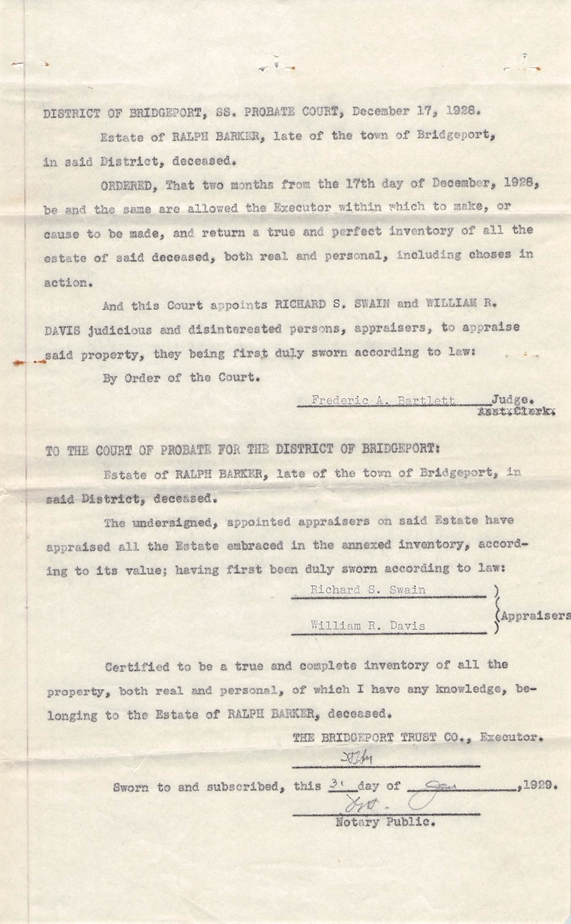
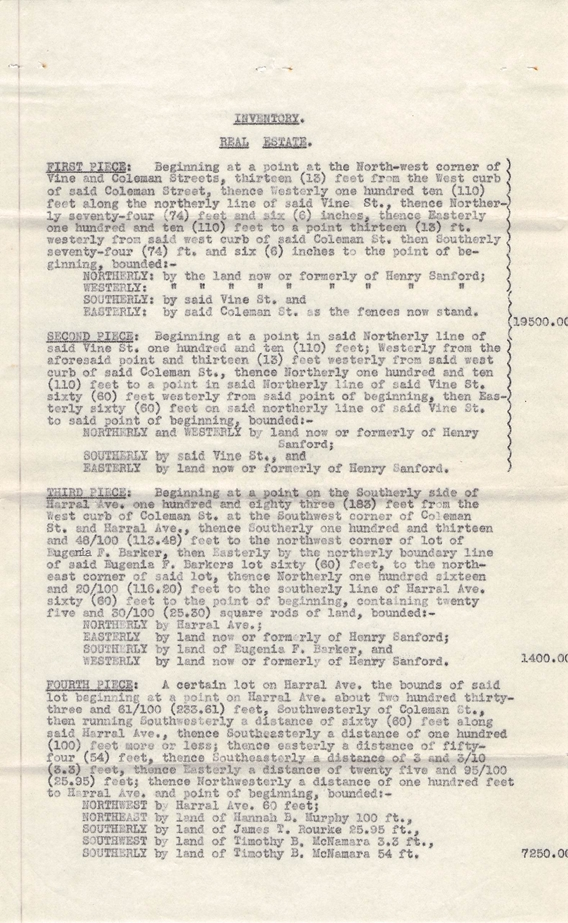
Estate of Ralph Barker – 17 Dec 1928

Posted in Barkers | Leave a comment

Statement by George R. Barker

The following statement was provided by my father, George Robinson Barker, describing what he knew or remembered about his grandfather, who died approximately one year before my father was born.

According to my father, Ralph Barker had a business partner known only as Captain Inglis. Captain Inglis was apparently based in Savannah, where my Aunt Eugenia spent many of her summers. My father believed the two men must have been close friends as well as business associates.

The Barker family reportedly owned a beautiful home in Jacksonville, likely in the Riverside area along the St. Johns River. My father thought the property may have been near the location of present-day Memorial Park. He often wondered whether the family might have known notable Florida developers such as Henry Flagler or other wealthy northern investors who played major roles in Florida’s early development during the late nineteenth century.

As far as my father knew, the family’s principal business enterprise was cotton brokerage in Madison. He believed this business probably continued into the early twentieth century.

My father also recalled that phosphate mining became increasingly profitable in Florida during that period. Early phosphate operations focused on extracting pebble phosphate from riverbeds, but by the 1920s technological advances — particularly diesel engines and electric-powered draglines — allowed mining companies to remove large amounts of overburden to reach rich phosphate deposits beneath the surface. This dramatically transformed the industry and attracted significant investment capital.

According to family recollections, Ralph Barker and his associates recognized these opportunities and became involved in phosphate mining operations near Dunnellon. My father believed this likely began during the first decade of the twentieth century because he personally remembered visiting the Withlacoochee River area as a boy. Since he was born in 1899, those memories would date to the early 1900s, coinciding with the peak years of Florida’s river-pebble phosphate industry, which largely ended around 1908.

My father also served briefly in the military during the closing period of World War I, probably around 1917–1918. Although he did not recall the exact dates, I remember seeing a photograph of him wearing his Army uniform.

At one point, my father researched Inglis in hopes of learning more about Captain Inglis and possibly discovering whether the town had been named after him. However, he found little useful information. He noted humorously that the town had once gained national attention through a televised “town-wide exorcism” intended to rid the community of Satan. Beyond that, most of the available information concerned real estate and local attractions.

He also mentioned nearby Yankeetown on the Gulf Coast, which had once been planned as the western terminus of the proposed Florida Barge Canal. Although the canal project was ultimately abandoned, much of its route later became part of the Cross Florida Greenway. The reservoir area created near the Gulf eventually became a wildlife management area featuring walking, biking, and equestrian trails.

My father concluded by saying:

“I am afraid this isn’t much, but it’s all I know without personally visiting the area archives. I don’t think I could add any more.”

— “Daddio”

Posted in Barkers | Leave a comment

Notes on George Barker (abt 1815)

George Barker was my second great-grandfather. He was born around 1815 in New York City and was the son of Ralph Barker and Sarah Brown Kirtland. George married Cornelia Clark, who was born on December 27, 1825, in Manchester. Cornelia was the daughter of Myron Clark and Laura Clark (maiden name unknown), who was born around 1790. Based on the reported birth dates, Cornelia appears to have been approximately ten years younger than George.

George and Cornelia Barker had the following children:

  • Edward Barker (born about 1841)
  • Alfred Barker
  • Ralph Barker (my great-grandfather)
  • William Ham Barker
  • Sarah Kirtland Barker, later known as the “First Deaconess”

The 1850 U.S. Federal Census listed George Barker as 35 years old and born in New York. No occupation was recorded for him. The census showed him living with:

  • Ralph Barker, age 72 (born about 1778), a farmer with real estate valued at $125
  • Sarah Barker, age 60 (born about 1790)
  • Mary Barker, age 27

This strongly suggests that Ralph and Sarah were George’s parents, while Mary may have been his sister.

In the 1860 U.S. Federal Census, George Barker was listed as 50 years old with the occupation “Gent,” likely meaning gentleman or a member of the gentry — someone supported by income from land or investments rather than manual labor. The household included:

  • Cornelia Barker, age 34
  • Ralph Barker, age 2 (my great-grandfather)
  • Sarah Barker, age 11 or 12
  • William “Ham” Barker, age 21, employed in the lumber business
  • Edward Barker, age 19, employed in the furniture business
  • Alfred Barker, age 14, working as a clerk

Also living in the household were two servants:

  • Ann Donnoho
  • Mary Ann McMahan

Observations and Questions

The census records raise the possibility that Cornelia Clark may have been George Barker’s second wife. If William Ham Barker was truly 21 years old in 1860, he would have been born around 1839, meaning Cornelia would have been only about 13 or 14 years old at the time of his birth. Additionally, Cornelia does not appear in the 1850 census household with George, further suggesting the possibility of an earlier marriage.

Another possibility is that some ages in the census records were incorrectly recorded, which was common in nineteenth-century census data.

The 1870 U.S. Federal Census listed George Barker as 55 years old and identified him as a retired merchant with real estate valued at $40,000, indicating considerable financial success. The household included:

  • Charles Barker, age 48, a merchant with real estate valued at $25,000
  • Charles R. Barker, age 22
  • George Barker, age 19
  • Mary Barker, age 18
  • Mary Barker, age 52

The older Mary Barker was likely George’s sister, although her listed age does not align with the previously estimated birth year of 1823. If born in 1823, she would have been about 47 in 1870 rather than 52. Such discrepancies were not uncommon in census records.

Also listed in the household were:

  • Ralph Barker, age 12 (born about 1858)
  • Sarah Barker, age 10 (born about 1860)

Cornelia Clark Barker had died on April 22, 1866, four years before the 1870 census, which explains her absence from that record.

Overall, the census records portray George Barker as a man who rose from a farming family background in New York to become a prosperous merchant and property owner by the end of his life. However, several inconsistencies in the ages and household relationships suggest that additional records — such as marriage certificates, probate records, cemetery records, or church documents — may help clarify whether George had more than one marriage and confirm the identities and birth dates of his children.

Posted in Barkers | Leave a comment

Expanded & Evaluated Barker Line (Generations 17–22)

(17) Edward Barker (1670–1727) & Mary Papillon (1682–1728)

Edward Barker (b. ca. 1670; d. 1727) is part of a later New England Barker line, likely descending from early Plymouth/Marshfield Barkers, though the exact generational link back to John Barker (d. 1652) is not firmly proven in primary records.

He married Mary Papillon (or Papillion), a surname that appears in New England records but is often inconsistently spelled—raising the possibility of transcription errors.

Children (as listed):

  • Eunice Barker (1703–1786)
  • Ebenezer Barker (1704–1726)
  • Edward Barker (1708–1763)
  • John Barker (1711–1801)
  • Mary Barker (1715–1757)

Evaluation:

  • The name Edward Barker (1708–1763) aligns chronologically with the next generation.
  • The Papillon surname appears rarely in New England; it should be verified against town vital records (likely Connecticut or Massachusetts).
  • No primary citation provided—this generation requires confirmation in town or church records.

Recommended sources:

  • New England Historic Genealogical Society databases
  • Barbour Collection of Connecticut Vital Records

(18) Edward “Deacon” Barker (1708–1763) & Hannah Baldwin (1714–1758)

Edward Barker (b. 1708; d. 1763), sometimes called “Deacon Edward Barker,” is more plausibly documented. The Baldwin surname strongly suggests Connecticut origins, especially New Haven County families.

He married Hannah Baldwin (b. 1714; d. 1758), likely from the extended Baldwin family of Milford/New Haven.

Children (as listed):

  • Papillon Barker
  • Mary Barker
  • Ebenezer Barker (1737–1781)
  • Edward Barker (b. 1739)
  • Hannah Barker (b. 1742)
  • John Barker (1744–1836)
  • Sarah Barker (b. 1747)
  • Peter Barker (b. 1750)
  • Benjamin Barker (b. 1752)
  • Irene Barker (b. 1756)
  • Samuel Barker (b. 1758)

Evaluation:

  • The Baldwin connection is credible and geographically consistent with Branford/New Haven families.
  • The use of “Deacon” suggests church records may exist.
  • The child Ebenezer (1737–1781) fits cleanly into the next generation.

Sources to confirm:

  • History of Ancient Branford, Connecticut
  • Connecticut church and probate records

(19) Ebenezer Barker (1737–1781) & Esther Russell

Ebenezer Barker (b. 1737; d. 1781) married Esther Russell (b. 1737). The Russell surname is common in Connecticut and Massachusetts, so identifying her exact family requires locality confirmation.

Children:

  • Thomas Barker
  • Lydia Barker (1765–1863)
  • Ebenezer Barker (b. 1768)
  • Jeremiah Barker (1774–1783)
  • Ralph Barker (b. 1778)
  • “Pollie” (Mary) Barker (b. 1780)
  • Mary Barker (b. 1780?)

Evaluation:

  • Duplicate Mary/Pollie entries likely refer to the same person (“Polly” was a nickname for Mary).
  • The timeline is consistent for a Connecticut family in the Revolutionary era.
  • Ebenezer’s death in 1781 suggests possible connection to Revolutionary War-era mortality, worth checking military or probate records.

Suggested sources:

  • American Revolutionary War service or pension records
  • Connecticut probate files

(20) Ralph Barker (b. 1778) & Sarah Brown Kirtland

Ralph Barker, born 27 Feb 1778 in Branford, Connecticut, is one of the stronger documented links in your line.

He married Sarah Brown Kirtland on 20 June 1809 in Old Saybrook, Connecticut.

Notes (expanded):

  • The Kirtland family is well-documented in Connecticut, adding credibility to this connection.
  • Migration to New York (possibly Throggs Neck) fits early 19th-century movement patterns.
  • Occupation as farmer aligns with census patterns.

Children (as listed, partially):

  • George Barker (1815–1888)
  • Mary Barker (b. 1823)

Issues:

  • Sarah’s birth is listed as 1789, but death is incorrectly shown as 1880 (likely typo).
  • More children likely existed—census records should be checked.

Sources:

  • Barbour Collection of Connecticut Vital Records
  • U.S. Federal Census (1810–1850)

(21) George Barker (1815–1888) & Cornelia Clark

George Barker (b. 1815; d. 1888) married Cornelia Clark on April 5, 1854, in Manchester, Vermont.

Cornelia was the daughter of Hon. Myron Clark, a well-documented Vermont political figure, which significantly strengthens this branch.

Children:

  • Edward Barker (b. 1841?) (chronology questionable—before marriage)
  • Alfred Barker (b. 1846?) (same issue)
  • Ralph Barker (1857–1928)
  • William Ham Barker (b. 1859)
  • Sarah Kirtland Barker (1859–1944)

Major Issue:

  • Children born before 1854 marriage suggest:
    • George had a previous wife, OR
    • Dates are incorrect

This needs correction using census and birth records.

Additional notes:

  • 1860 Census: merchant
  • 1880 Census: broker in New York City

Sources:

  • U.S. Federal Census (1860, 1880)
  • Vermont town records

(22) Ralph Barker (1857–1928) & Eugenia Frear Robinson (1858–1924)

Ralph Barker (b. 1857; d. 1928) married Eugenia Frear Robinson.

This generation is well within modern record reliability, and most details should be verifiable through civil records.

Children:

  • Cornelia Clark Barker (1882–1949)
  • Grace Lillian Barker (1885–1885)
  • Julia Robinson Barker (1886–1886)
  • Charles Edward Barker (1888–1906)
  • Eugenia Kirtland Barker (1888–1964)
  • Ralph Frederick Barker (1894–1943)
  • George Myron Barker (1899–1972)

Observations:

  • Reuse of names (Cornelia, Kirtland, Myron) reflects strong maternal lineage ties
  • Infant mortality (multiple children dying young) is historically typical

Sources:

  • State vital records (NY/VT)
  • Cemetery records
  • U.S. Census (1900–1920)
Posted in Barkers | Leave a comment

A Genealogical Report on John Barker (d. 1652) of Plymouth Colony, Duxbury, and Marshfield, Massachusetts

This cleaned up information that was shared by schlebek01 on 28 Jul 2025 – it has not been verified.

Introduction

This report examines the life of John Barker, an early settler of Plymouth Colony who resided in Duxbury and later Marshfield, Massachusetts, and died in 1652. The goal is to distinguish documented facts from later genealogical tradition and to present the evidence in accordance with accepted historical standards.


Origins and English Ancestry

John Barker is frequently identified in later genealogical compilations as the son of Sir Robert Barker and Catherine Ackworth, and as a descendant of Randulph de Calverhall of England (circa 1200). However, no primary evidence has been found in either English or colonial records to substantiate this lineage. These claims appear in secondary sources and compiled genealogies and should therefore be regarded as unproven.¹


Immigration and Early Settlement

It is generally stated that John Barker and his brother Robert arrived in Plymouth Colony about 1628. While no surviving passenger list confirms this date, Barker appears in colony records by the early 1630s, supporting the likelihood of immigration during this period.²

Tradition holds that the Barker brothers explored beyond Plymouth and settled near Herring Brook, in present-day Pembroke, after traveling by boat along the coast and entering the North River. This pattern is consistent with known expansion from Plymouth into surrounding settlements during the 1630s.³


Residence in Duxbury and Occupation

By 1637, Barker resided in the area set off as the town of Duxbury. He is identified in records as a brick mason, indicating a skilled trade uncommon but valuable in the colony.⁴

A Plymouth Colony court record documents an apprenticeship agreement between John Barker and William Barden. Barker agreed to teach Barden the trade of bricklaying, with compensation at the completion of service consisting of “20 bushels of corn, two suits of apparel, and a ewe goat’s lamb.”⁵


Move to Marshfield and Ferry Operation

By 1638, Barker had removed to Marshfield, where he purchased and operated a ferry at Jones River (now the North River). He entered into a covenant to maintain the ferry at a rate of two pence per person until a bridge should be constructed.⁶

Such ferry operations were essential to early colonial infrastructure and were often privately maintained under agreement with local authorities.


Military and Civic Activity

In 1643, Barker was listed as a member of the Marshfield Military Company under Lt. Nathaniel Thomas, reflecting his participation in the colony’s militia system.⁷

In 1648, Barker was involved in a boundary dispute with a neighbor. The Plymouth court appointed John Alden and Myles Standish to mediate the disagreement, demonstrating both the seriousness of the matter and Barker’s standing in the community.⁸

On 5 June 1651, Barker was admitted as a freeman of Plymouth Colony, granting him full civic privileges.⁹


Death and Estate

John Barker died by drowning on 14 December 1652 while at his ferry. His estate was inventoried at £131, indicating a moderate level of wealth for the period.¹⁰


Marriage and Family

John Barker married, about 1632, Ann Williams, identified as the daughter of John and Ann Williams. Documentation of her parentage is incomplete, and her mother’s maiden name remains unknown.¹¹


Conclusion

John Barker was an early Plymouth Colony settler whose life is reasonably well documented in colonial records, particularly regarding his occupation, civic activity, and residence in Duxbury and Marshfield. While later genealogical traditions assign him noble English ancestry, such claims remain unverified. The primary records instead portray him as a skilled tradesman, landholder, ferry operator, and active member of his community.


Footnotes

Savage, Genealogical Dictionary, s.v. “Barker.”

A Genealogical Dictionary of the First Settlers of New England (Boston, 1860–1862), s.v. “Barker”; see also Colonial Families of the United States (New York, 1907), both of which include unverified lineage claims.

Records of the Colony of New Plymouth in New England (Boston, 1855–1861), passim.

History of the Town of Duxbury, Massachusetts (Boston, 1849), 245–250.

Shurtleff, Records of New Plymouth, and Winsor, History of Duxbury.

Shurtleff, Records of New Plymouth, court orders (apprenticeship agreement).

Ibid.; Winsor, History of Duxbury.

Colonial Families of the United States, citing militia lists of 1643.

Shurtleff, Records of New Plymouth, court proceedings, 1648.

Ibid., freemen list, 5 June 1651.

Plymouth Colony probate records; see also Mayflower Descendant for abstracts of early Plymouth estates.

Posted in Barkers | Leave a comment

Barker Family Line (Early Generations)

The American Barker line is real and traceable – the story elements are partly tradition and not documentation. The English pedigree is not proven and, for now, should be treated as hypothesis and not fact. Here’s what needs to be done next:

Anchor the immigrant Robert Barker (c1616 – 1691) in
– Plymouth Colony records
– Land deeds
– Church records

1. William de Calverhall, later known as William le Barker of Hallon.
    Child:

2. Roger le Barker, died 1368.
    Child:

3. William Barker, of Hallon, died 1411.
    Child:

4. Henry Barker, of Hallon, died 1438.
    Child:

5. William Barker, of Hallon, died 1480.
    Child:

6. John Barker, of Hallon, died 1507.
    Child:

7. John Barker, of Aston, died 1531.
    Child:

8. Humphrey Barker, of Aston, died 1538.
    Child:

9. William Barker, of Claverley; married Margaret Goulston, daughter and heiress of John Goulston of Goulston, parish of Chewardine, England.
    Child:

10. William Barker, of Colhurst; married Joan Horne, daughter of William Horne.
    Child:

11. John Barker, of Colhurst; married Elizabeth Sandford, daughter of Hugh Sandford.
    Child:

12. George Barker, of Colhurst; married Catherine Buckley, daughter of Thomas Buckley.
    Child:

13. Robert Barker; married Catherine Ackworth, daughter of George Ackworth of Kent.
    Children (reported):
    • John Barker
    • Robert Barker
    (said to have emigrated to New England, ca. 1628–1630)


Early New England Settlement

14. John Barker and Robert Barker, brothers, are described as early adventurers in Plymouth, Massachusetts, arriving circa 1628–1630. As young men of some means, they became dissatisfied with conditions in Plymouth Colony and sought opportunity beyond its settled bounds.

They acquired a boat and, accompanied by an enslaved African assistant, explored the nearby coastline. Entering what was then called the “Great River” (later known as the North River), they traveled inland to the Namassakeeset stream and ultimately reached Indian Pond.

Recognizing the strategic and economic potential of the location, they established a trading post. Their first shelter was a crude hut erected to survive the winter. In the following spring, they constructed a more permanent dwelling in what is now Pembroke, Massachusetts.

This structure was modest but durable: a small, square stone house approximately fifteen feet on each side and about six feet in height, built of flat stones laid in clay mortar and covered with a shed roof. It contained a single room with a large central fireplace. A wooden frame addition was later attached, and the house reportedly remained in use by Barker descendants until after 1883.

Because of its sturdy construction, central location, and the presence of a well within its walls, the house was adapted for defensive purposes. During King Philip’s War (1675–1678), it served as a garrison house. Defensive portholes were said to remain visible until the structure was eventually dismantled.


Historical Context Notes

  • Hallon, Aston, and Claverley (England): These locations are in Shropshire, reflecting the family’s long-standing roots in that region during the late medieval and early Tudor periods.
  • Use of “le Barker”: The name suggests an occupational origin (likely related to tanning or working with bark), common in medieval England before surnames became fixed.
  • Migration Period (1620s–1630s): This aligns with the broader wave of early English settlement in New England following the founding of Plymouth Colony in 1620.
  • Trading Posts: Early settlers often established such posts to trade with Native Americans, particularly in furs.
  • Garrison Houses: During conflicts like King Philip’s War, fortified homes served as local defensive strongholds for settlers.
Posted in Barkers | Leave a comment

Genealogical Report: Barker Families of Early New England and Claimed English


This is a more formal genealogical report version, with citations, notes on reliability, and clear separation between documented facts and traditional claims – created by ChatGPT based on the previous post.

Origins

1. Edward Barker of Branford, Connecticut

Edward Barker was born circa 1625 in England (exact location unknown). He emigrated to New England around 1640 and settled in Branford, in the Connecticut Colony.

He was a prominent resident of Branford and appears in local records through the latter half of the 17th century. He died about 1703, leaving numerous descendants. The identity of his wife remains unknown, as no definitive primary record has been found.

Sources:

  • The History of the Colony of New Haven
  • Genealogical Dictionary of the First Settlers of New England
  • Families of Ancient New Haven

Notes:
Edward Barker’s parentage has not been conclusively proven. No primary evidence directly connects him to the Barker families of Plymouth or to earlier English lines.


2. Robert and John Barker of Plymouth Colony

Robert Barker of the Plymouth Colony and his brother John Barker of Duxbury, Massachusetts are frequently cited in genealogical literature as early settlers.

They are sometimes associated with a shared coat of arms described as:
“Barry of ten or and sable, over all a bend or.”

In heraldic terms, this indicates:

  • Ten horizontal stripes alternating gold (or) and black (sable)
  • A diagonal gold band (bend) across the shield

Sources:

  • Genealogical Research in England
  • Burke’s General Armory

Notes on Reliability:
The use of a coat of arms by colonial families does not constitute proof of lineage. Heraldic arms were legally restricted in England, and many early American families adopted arms without verified entitlement. No primary documentation conclusively links Robert and John Barker of New England to a specific armigerous Barker family in England.


3. Claimed English Ancestry: Calverhall (Shropshire)

The Barker lineage is traditionally traced to Randulph de Calverhall, who held the Manor of Calverhall around 1200 in Shropshire.

This pedigree is recorded in the Visitation of Shropshire, a heraldic survey conducted by the College of Arms.

Lineage (Traditional Account)

  • Randulph de Calverhall (c. 1200)
  • William de Calverhall (fl. 1219)
  • Descendants including another Randulph de Calverhall (c. 1278), said to bear early Barker arms
  • William (allegedly fled during unrest under Edward II of England, r. 1307–1327)
  • Settled at Hallon as William le Barker
  • Roger le Barker
  • William Barker
  • William Barker
  • Henry Barker
  • William Barker
  • John Barker
  • John Barker
  • John Barker of Colohurst
  • George Barker
  • Sons: John and Robert Barker (alleged emigrants)

Sources:

  • The Visitation of Shropshire 1623
  • Heraldic Visitations of England

Notes on Reliability:

  • Visitations were based partly on family-submitted pedigrees, which were not always verified.
  • The connection from medieval Calverhall families to 17th-century emigrants remains unproven.
  • The narrative of flight during the reign of Edward II is traditional and not supported by primary evidence.

4. Other Early Barker Immigrants to New England

Richard Barker

Recorded in Andover, Massachusetts, in 1643.

Source:

  • Records and Files of the Quarterly Courts of Essex County

James Barker of Salem

James Barker, his wife Grace, and their son Barzillai arrived in 1638 at Salem, Massachusetts as part of a group led by Ezekiel Rogers.

Sources:

  • The Great Migration Begins
  • A Genealogical Dictionary of the First Settlers of New England

Notes:
This family is well documented and produced many descendants. Their English origin is still under study.


5. Samuel Barker of Delaware (Quaker Migration)

In 1682, William Penn sailed on the ship Welcome to America. Among his associates was Samuel Barker, a member of the Religious Society of Friends.

Samuel Barker settled near Wilmington in the Delaware Colony.

He is buried at Old Swedes Church.

Sources:

  • Pennsylvania Archives
  • Encyclopedia of American Quaker Genealogy

6. Later Barker Line: James Barker (18th Century)

A later Barker figure, James Barker, is said to have been born in England in 1726. Tradition states he served as a naval officer and was present with George Washington during the Braddock Expedition.

He married Mary Smith of Portsmouth, England.

Sources:

  • Family histories (unpublished)
  • Local Virginia and Delaware records (partial)

Notes on Reliability:

  • His naval rank and participation in Braddock’s campaign require further primary documentation.
  • This line is better documented from later generations in America than from its English origin.

7. Migration into the American Interior

Descendants of the Delaware Barker line moved westward:

  • Into Pennsylvania (Redstone region)
  • Later into present-day West Virginia

A descendant, Mary Barker (4th generation), married James Burwell, linking the family to established Virginia lineages.


Conclusion

The Barker surname appears among multiple early immigrant families in New England and the Mid-Atlantic colonies. While several lines are well documented in America beginning in the 17th century, their connection to one another—and especially to medieval English families such as the Calverhall line—remains largely unproven.

Key points:

  • Edward Barker of Branford is a documented early settler with unknown origins.
  • Several independent Barker families arrived in New England between 1630–1640.
  • Heraldic evidence (coat of arms) is not sufficient proof of ancestry.
  • Medieval pedigrees from heraldic visitations should be treated as tentative unless supported by primary records.

Posted in Barkers | Leave a comment